
C-Suite Confidential: How People-First Workplaces Power Performance
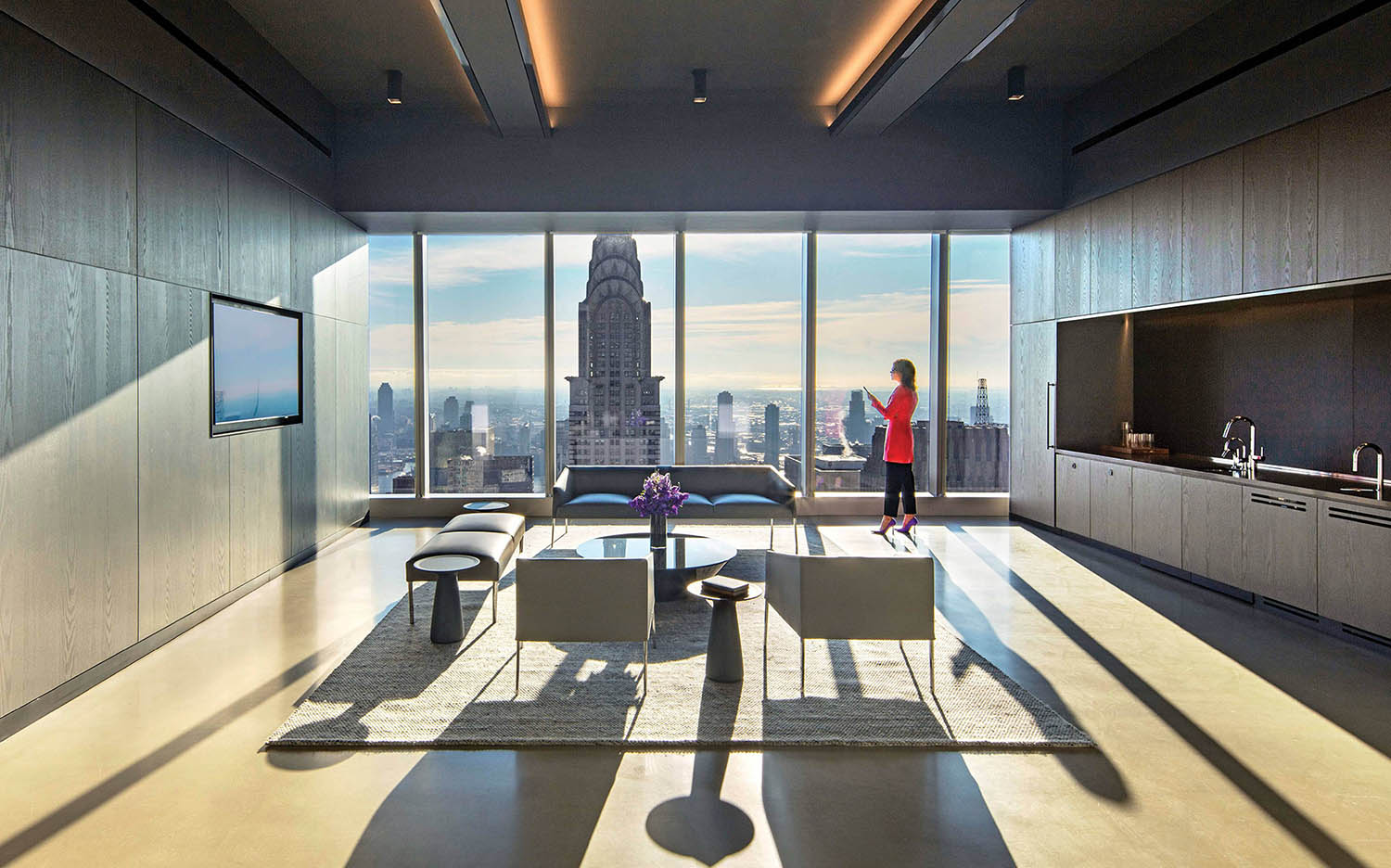
For a recent Interior Design roundtable event focused on the evolving workplace, editor in chief Cindy Allen, the evening’s host and moderator, asked practitioners to invite along a favorite C-suite power player. The guest list was a diverse group of designers, architects, building developers, landlords, and client-side execs representing industries from finance to fashion. During the conversation, attendees addressed the challenges and opportunities they face in shaping offices to accommodate today’s work styles, which have been recalibrated by post-pandemic dynamics and the shifting relationship between employers and employees. The discussion pinged from how to navigate decision-making bottlenecks to what enticements have proven most effective to lure WFH staffers back to the office.
There was also much talk (and venting!) about the persistent bugaboo of designing for hybrid work, which has become a permanent fixture of the modern workplace—even for companies with a five-day in-office policy. Conference spaces in particular have become a locus of creative problem-solving, with designers optimizing details such as conference-table shape (for improved sight lines and acoustics) and surface material (to mitigate on-screen reflectivity) to ensure virtual and IRL participants can collaborate seamlessly and equitably. Of course, accommodating a range of mixed-presence meeting modalities—workshops, presentations, etc.—demands environments and tech setups that are highly modular and adaptable. An alternative to conceiving one multitasking, does-it-all boardroom is to devise an array of smaller, specialized spaces catering to specific activities. Landlords and building managers are particularly well positioned to offer such a suite of hybrid amenities that tenants can book and access as needed, providing flexibility without requiring extensive investment on the part of individual companies.
Even with the most advanced tech setup, however, the remote experience can’t quite rival the energy and synergy of in-the-flesh interactions. “Zoom meetings are very transactional,” said Amy Binder, CEO of strategy firm RF Binder. Brent Capron, Corgan associate principal, piggybacked on that comment, contrasting “the controlled environment of videoconferencing with the rich conversations, unplanned interactions, and spontaneous insights that occur face-to-face.” Alas, in-person connections can only happen if you can actually get people back into the office, which clients say they are still struggling with. They strive to envision a workplace experience that “earns the commute,” as one put it: that merits the very real financial and logistical hurdles involved in getting there, from jostling with the rush-hour public transit crowds to paying for childcare.
Approaching Amenities With Intention
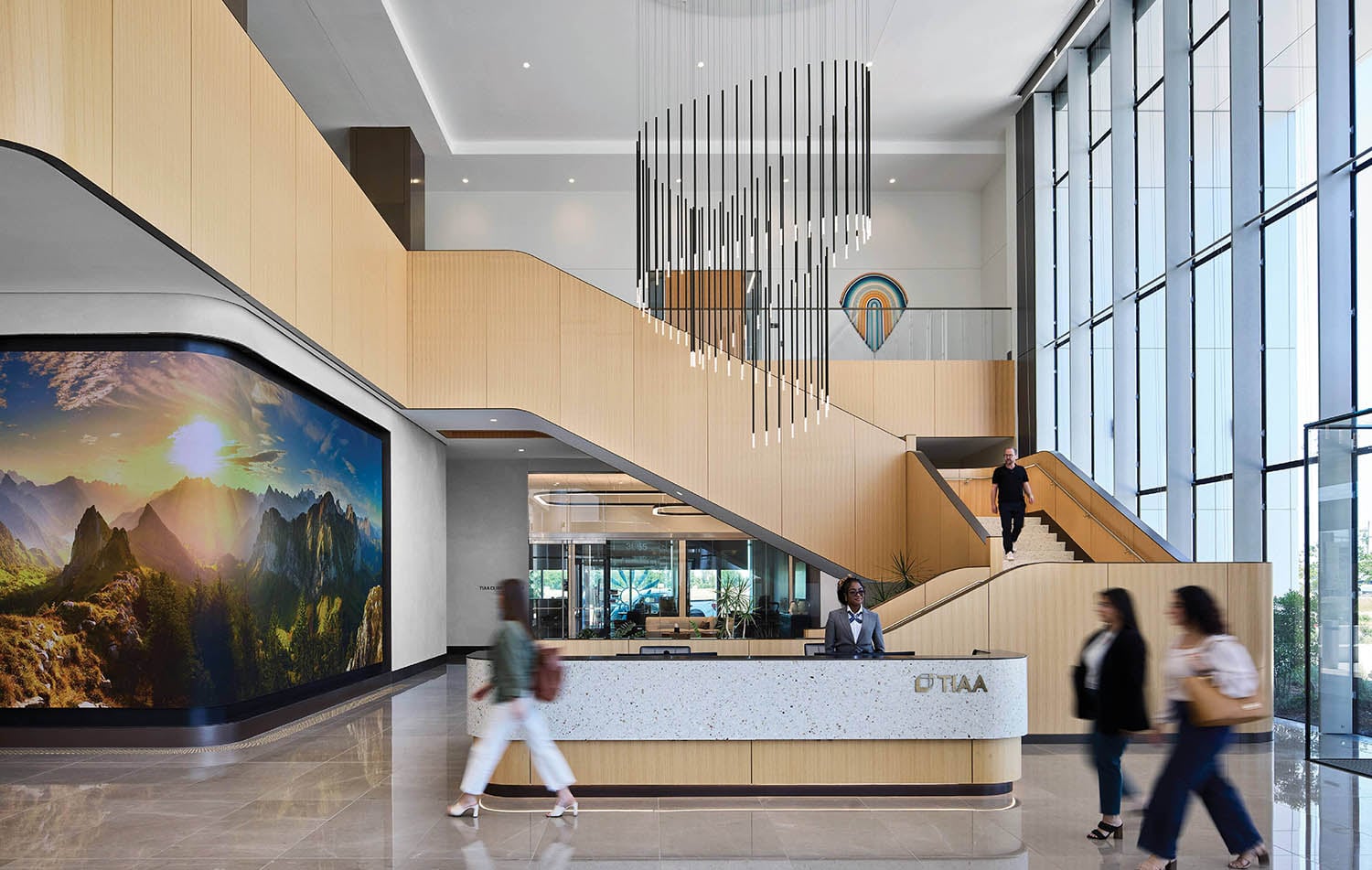
So, what makes the office worth the trek? With focused tasks often easier to accomplish at home, the big payoff for employees is camaraderie and community. To facilitate this more social purpose, companies have become reliant on amenities, “spaces we think of as add-ons, but where most people actually do the majority of their work,” explained Brad Zizmor, Architecture Plus Information cofounder and an Interior Design Hall of Fame member. Practitioners and clients are mindful of past missteps, having created amenities that didn’t always capture what the workforce wanted and needed. Offerings such as nap and game rooms tend to be underutilized or feel out of touch, while subpar acoustics and too-soft-to-work-in lounge chairs compromise usability. “Figuring out which types of spaces were most used involved some trial and error,” said fellow Hall of Famer and retired TPG Architecture managing executive Mavis Wiggins. Turns out, it’s the ones that are thoughtfully integrated into the office’s functionality without feeling forced, and that put a primacy on ergonomics, comfort, and flexibility.
Companies are keen to lease space in properties that boast building-wide amenities. “Clients are making the trade-off of taking slightly less square footage but in a nicer or upgraded address—with great amenities, good views, or a ‘wow’ moment—and shifting to a more agile design with shared offices or other space-saving elements that suit a hybrid workforce,” said HLW associate principal Currie Gardner. These days, with empowered staffers more in tune with what posture and environment they work best in, “We’re trying to cater to so many people’s needs,” LSM director Nathan Strieter commented. “Amenities can make up for that,” he added, by providing a range of space types for workers to choose from.
An amenity-rich campus can also help solve the hybrid-workforce issue of fluctuating attendance, relieving the burden of overcapacity when needed. “There’s a real challenge with not knowing who’s coming into the office every day,” Gensler principal Tom Krizmanic stated. Savvy landlords are taking note and offering more robust, hospitality-like environments as well as embracing what Vornado Realty Trust’s executive VP Josh Glick described as “an expanded customer service role” vis-à-vis the tenant relationship. Even so, amenities are a programming element for which property owners crave more ROI metrics. “We’re still wondering what the right allocation of common space is,” said Adam Lavinsky, senior asset manager of MEAG New York. “That’s where the next conversation is.”
Dynamic Spaces To Support Reciprocal Learning
Cross-generational learning and informal skill-sharing by osmosis were other casualties of a protracted pandemic work-from-home period, and companies are still course-correcting. “We’ve demonstrated that for the most part, work can get done wherever—at the office, at home, in a third place—but the office is where passive and direct learning happens,” said designer Suzanne Carlson. Many have observed generational differences in how people have weathered remote and hybrid policies. “When we reopened our office post pandemic, it was the youngest people who came back first,” one client recalled. “They were really craving the in-person experience—and the guidance that comes along with it.”
No wonder, then, that one of the most motivating RTO drivers is mentorship—a relationship that’s becoming more of a two-way street. “With the flattening of organizations, mentorship looks different than it used to,” Capron affirmed. Interior Design Hall of Famer and Rapt CEO/CCO David Gallulo divulged that he goes into the office “to be challenged” by his coworkers, and adds that “learning goes both ways,” with younger employees bringing fresh ideas and tech savvy to the table and seasoned professionals sharing strategic insights. Such reciprocity can strengthen teams and foster innovation, but to do so, office environments must nurture both passive and active knowledge transfer. The concept of “workplace learning” offers a new model for thinking of the office as a sort of education environment that can be designed to support active interactions—especially in light of knowledge gaps exacerbated by demographic shifts and hybrid work.
The modern workplace is about more than output. “Productivity has been redefined,” noted Binder. “It’s not just about checking items off your to-do list; it’s about creativity and strategic work.” Employees now come to the office to cognitively refresh, brainstorm with colleagues, leverage the energy of in-person interactions, and engage in face-to-face connections that build team cohesion. This shift in design focus from cultivating individual productivity to nurturing a collective experience has transformed the very role of the workplace: an institution we increasingly rely on for human connection in an age of digital displacement.

read more

DesignWire
Young Designers Talk Empathy And Innovation At 30/30 National Conference
Nearly 60 young designers gathered at THE MART in Chicago for Interior Design’s 30/30 National Conference November 2-4, 2025.
DesignWire
10 Questions With… Jorge Diego Etienne
Discover how industrial designer Jorge Diego Etienne casts a spotlight on Mexico’s creative talents transforming the contemporary design landscape.