

10 Questions with… Jan Hendzel
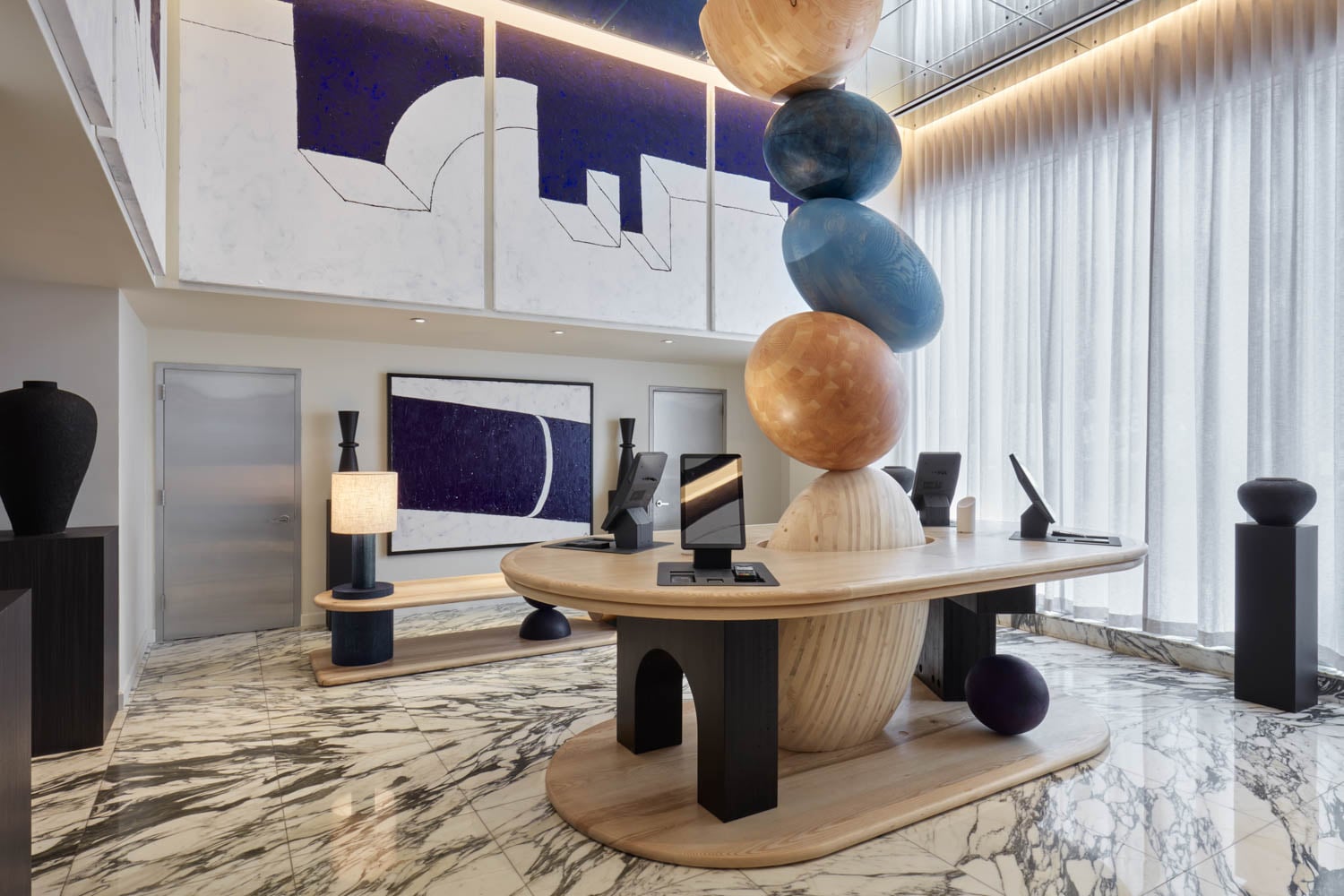
When walking along Park Avenue, sharp-eyed pedestrians may notice a soaring tower of colorful, stacked spheres in the lobby of Hotel Park Ave. The 12-foot-high wooden sculpture, titled Pebble Jumble, is British artist and designer Jan Hendzel’s first large-scale commission in the United States. The structure—five massive, rounded blocks of wood, in different colors, rising through the hotel’s wooden reception desk— delivers the celebrated wood master’s decades-long fascination with timber within its gravity-defying body. Much like Hendzel’s work in furniture and sculpture, you see a familiar sense of experimentation that embraces tradition with a twist in Pebble Jumble.
Hendzel produces his wide-ranging work from a Thames River-view studio, which he calls a “cathedral of light.” The workspace, where he oversees a team of seven professionals from different backgrounds, was a factory that formerly produced the first transatlantic telephone cables. More than a century later, Hendzel links to the U.S. in his own way, with this commission, at the invitation of the hotel’s creative director, Jacu Strauss.

Jan Hendzel Crafts Bespoke Wooden Creations

Interior Design: Wood is a material that appears in nearly every era, trend, or geography. How do you approach wood to create a timeless look while also remaining contemporary?
Jan Hendzel: Timber is a material of boundless potential, utilized for millennia in the creation of countless objects and dwellings. Infinitely renewable, it adapts to diverse applications. Our methodology involves studying and referencing past masters, fusing traditional techniques with digital innovation to forge a contemporary typology. This approach marries the familiarity of joinery with enhanced, carved proportions. Our work follows that sinuous, flowing path from concept to object, building on the studio’s exacting sense of experimentation that guides us to make objects the best they can be.
ID: What are some of your favorite types of wood and why?
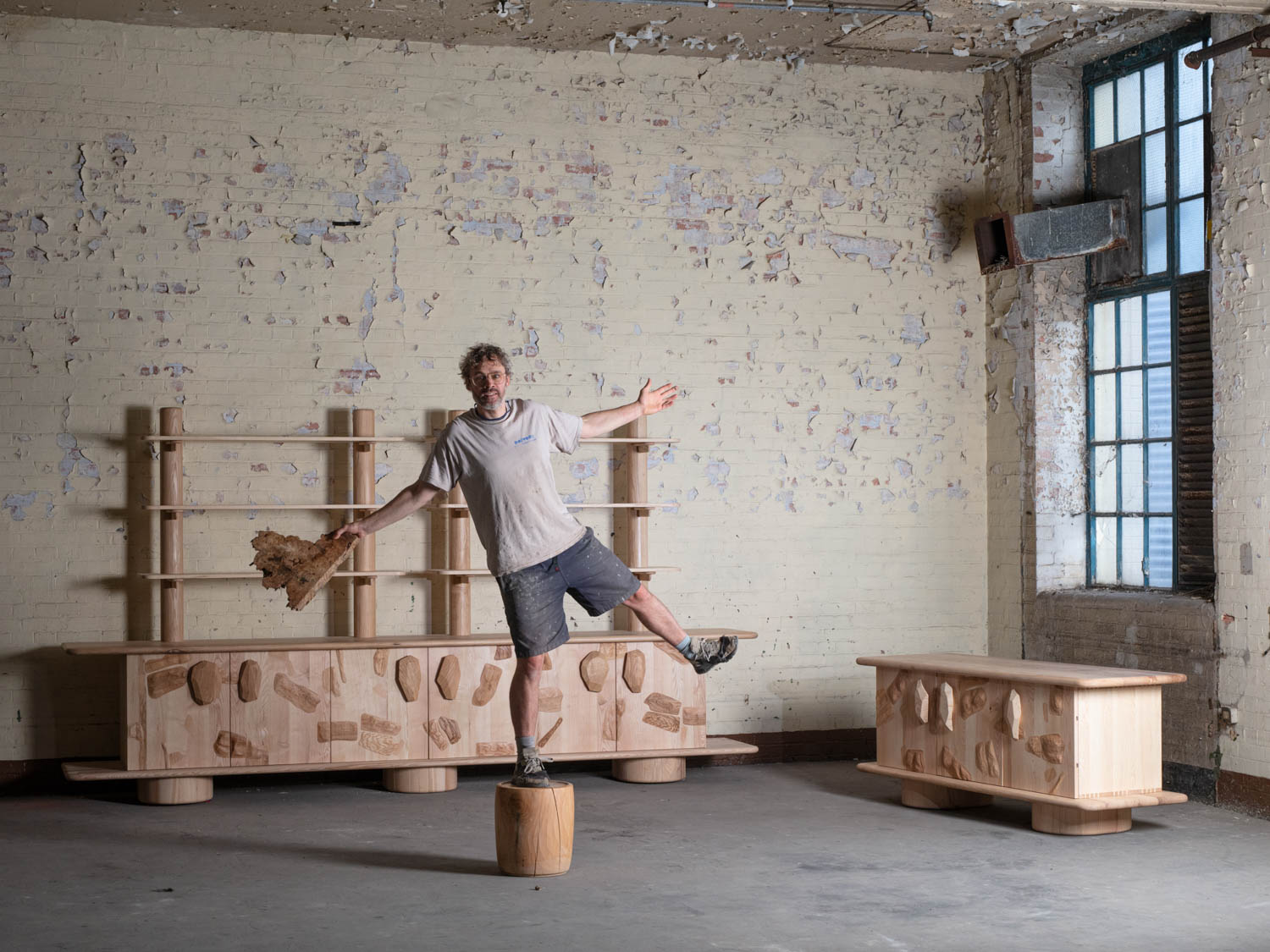
JH: Our design studio specializes in crafting pieces from British-grown timbers. We possess a deep understanding of timber cultivation and sourcing, which informs our careful selection and specification for projects. Currently, olive ash and Douglas fir are central to our work, valued for their distinct grain variations and working properties.

ID: How do you approach a commissioned furniture piece as opposed to a sculpture?
JH: Our approach aligns in its methodology: We meticulously dissect each brief, then push the boundaries of the project’s parameters. The selection of timber is a crucial early decision, as its distinct qualities inform both the narrative and technical specifications of every commission.
ID: Pebble Jumble greets the visitors of Hotel Park Ave. What do you think about a sculpture’s role as a sign of hospitality?
JH: Our studio aims to bring joy to all who encounter it. Pebble Jumble, for instance, is designed to immediately capture attention, offering a “wow” moment that sets the stage for an unforgettable experience in any hospitality space. Its captivating presence sparks the imagination.
ID: Balance is an important part of your work. Could you talk about both embracing and challenging balance in your practice?
JH: Our design workshop thrives on bespoke commissions, a privilege that allows us to deeply develop each project. Balance, proportion, and composition are fundamental to our work. We see ourselves at the forefront of woodworking innovation; bespoke commissions provide the ideal platform to advance these techniques, which then inform our ready-to-go collections. These unique projects are invaluable opportunities for experimentation.
ID: You both use natural colors of the wood as well as painted surfaces. How is your relationship with colors?
JH: My exploration of color is an evolving journey. I often create a dialogue between materials by pairing natural timber hues, perhaps showcasing the differing grain colors of two oak species. For instance, I might contrast the deep, rich ochre of brown oak (infected with beefsteak fungus) with the golden tones of prime oak. Alternatively, I might introduce sharp pops of color to accentuate the grain’s depth. Every decision I make is intentional, guiding your experience of each piece.
ID: There is a growing interest in natural materials in interior design, partially due to the digitalization of our everyday lives. How do you see the role of wood in interiors of the future?
JH: Timber remains a popular choice in interior design, but its application is evolving. The integration of sculptural elements into both freestanding and fitted timber furniture is creating intriguing aesthetics. Beyond its visual appeal, timber excels at naturalizing a space. Its tactile quality, intriguing textures, and even its scent contribute to a multi-sensory experience. For many, timber evokes nostalgia, offering a sense of familiarity and comfort.
ID: Whether a table or sculpture, there is a sense of completeness and wholeness in your approach to wood. Could you talk about this element of integrality in your work?
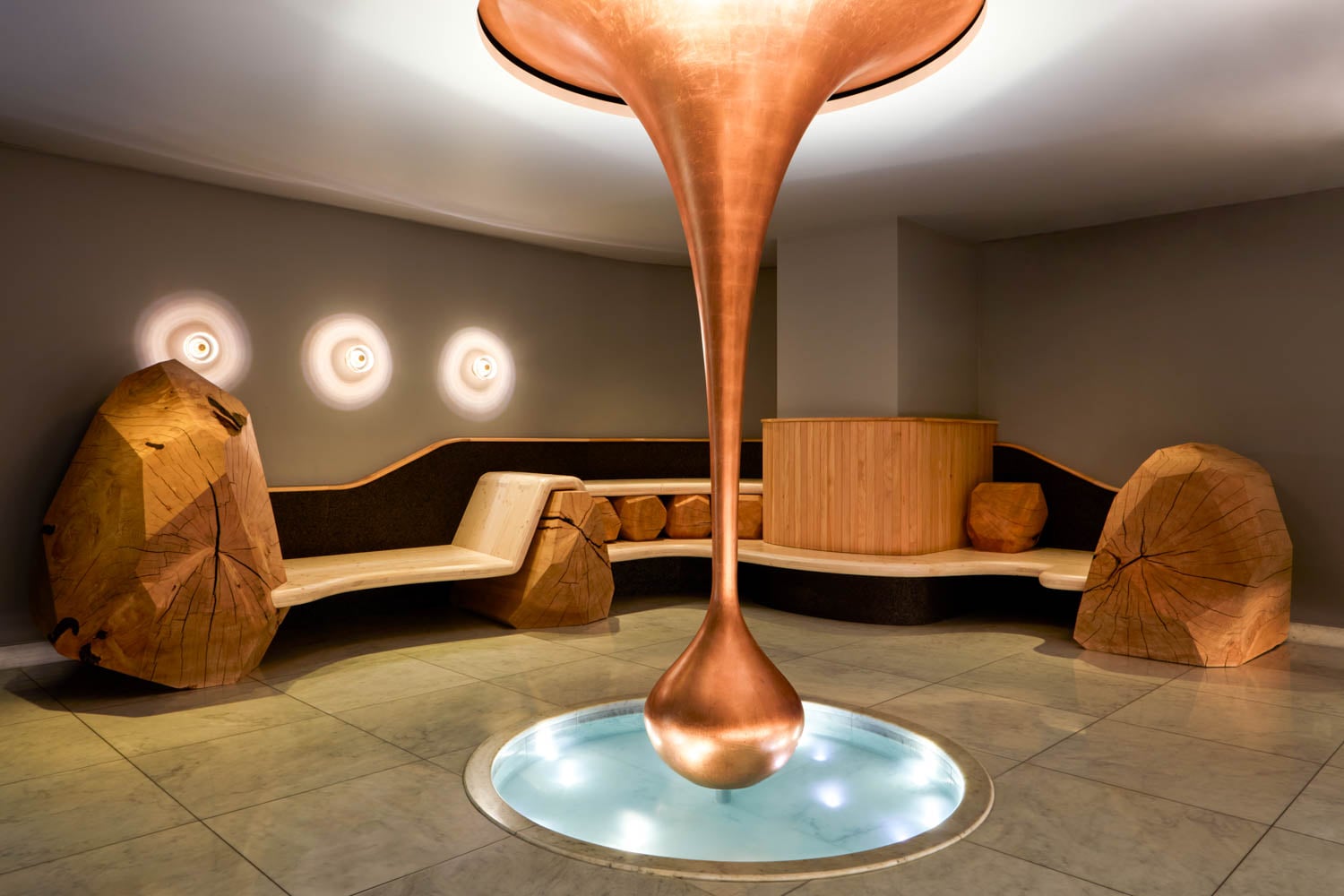
JH: We love the opportunity to work with timber, one of nature’s most abundant resources, and strive to embed the story of its creation into every piece we craft. From its origin as a felled tree, through the sawmill and drying process, and finally into our workshop, each creation possesses its own unique DNA. Often, the material’s origin directly influences the piece’s name or design elements. Beyond its functional purpose, the embedded narrative provides additional layers that contribute to a profound sense of completeness.
ID: You often collaborate with emerging young designers and makers. Could you discuss how these partnerships contribute to the future of design and wood-making?
JH: Recognizing the depth of talent among emerging makers, we actively support our team members in their personal design endeavors. To further champion new talent, we established the 11:11 exhibition series. For each show, we curate a selection of 11 established designer-makers and then issue an open call for 11 emerging talents. Each established designer then selects one emerging artist from the open submissions. This unique format showcases an incredible breadth of design talent, allowing emerging artists to benefit from the established designers’ networks and creating a truly exciting design exhibition. It’s particularly thrilling when emerging talents are chosen by their design heroes. We are currently seeking sponsors for our next 11:11 showcase.
ID: You come from a background in patternmaking. How do you translate this period into your current practice, which has minimalist cues?
JH: My background is in engineering patternmaking, a highly precise profession focused on creating original pieces for metal casting and tooling. That apprenticeship taught me the intricacies of working with timber, including measuring, machining, and carving, and the critical importance of precision in forming shapes. Looking back, I now view this work as highly sculptural, albeit with a highly industrialized outcome. Having mastered the art of measuring and marking out, I then taught myself furniture making, which I found to be the easier part. While I don’t consider myself a minimalist, I recognize that some of my pieces reflect that aesthetic.

read more

DesignWire
Designer Olle Lundberg Dies At 71
A tribute to Olle Lundberg, founder of his San Francisco-based architecture and design practice and champion of local craftsmanship.
DesignWire
Young Designers Talk Empathy And Innovation At 30/30 National Conference
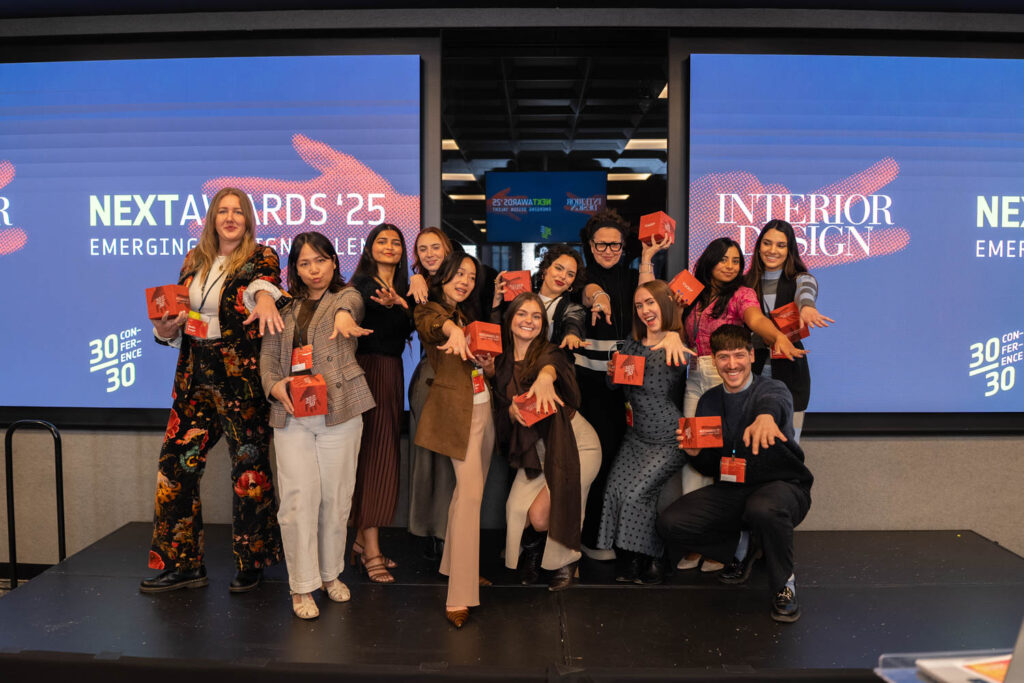
Nearly 60 young designers gathered at THE MART in Chicago for Interior Design’s 30/30 National Conference November 2-4, 2025.